

Utah National Guard takes to the air in wildfire fight

As wildfires burn across Utah, some of the state’s heaviest firefighting equipment is coming from the Utah National Guard.
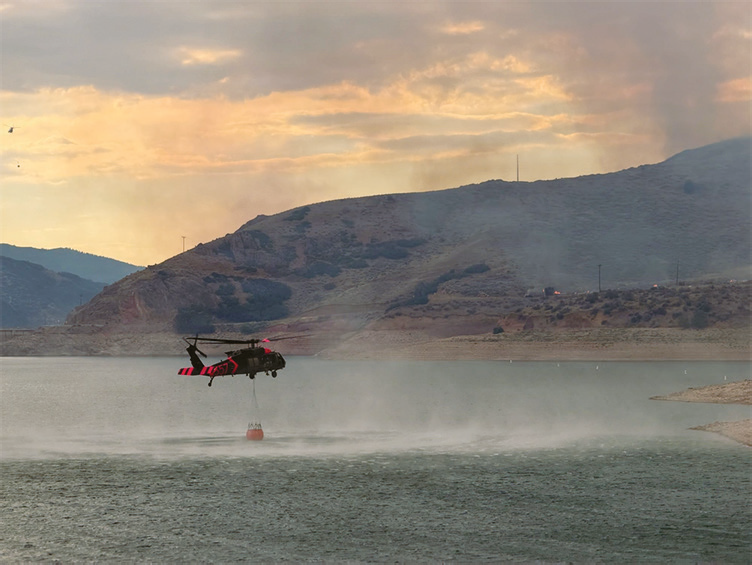
Crews from the 2-211th General Support Aviation Battalion have deployed UH-60 Black Hawk helicopters to assist civilian firefighting agencies, using 530-gallon buckets to deliver water directly to fires and threatened areas.
The battalion began wildfire operations August 5 at the Black Canyon Fire in Sanpete County before shifting two Black Hawks and their crews to the Rocky Canyon Fire in Morgan County. By August 11, Guard helicopters had logged more than 100 flight hours and dropped approximately 160,000 gallons of water on the two fires.
When local authorities need additional resources, assistance from the Guard is activated through the Utah Department of Emergency Management and governor’s office.
“We stand ready to support our state when these type of incidents occur,” said Lt. Col. Penny McCarthy, commander of the 2-211th.

The work can mean 12-hour shifts for Guard personnel, with pilots sometimes spending seven or eight hours in the air. Chief Warrant Officer 4 Chris Aylstock said one of his days included 48 bucket drops.
The helicopters can attack a fire directly, support backburning operations, wet vegetation ahead of flames and help protect structures. Crews coordinate closely with incident commanders, ground firefighters and other aircraft sharing the airspace.
Behind the pilots is a larger support operation. Maintenance crews in West Jordan work to keep the helicopters ready, while pilots rotate through shifts to maintain continuity as fire conditions change.
The Guard prepares for the mission well before wildfire season. McCarthy said crews train with the Utah Department of Natural Resources, U.S. Forest Service and local agencies and conduct flight training designed to prepare pilots for wildfire operations.

For Guard members, McCarthy said, responding to fires in Utah carries particular significance.
“One of the most important things that we do on these fires, of course, is preserving life, preserving property and easing human suffering,” she said. “And it just hits different when it’s our neighbors.”


